DS1 Case study – Litter survey at the Außenalster
Background: The Lebendige Alster project
The Lebendige Alster project is a joint initiative by NABU Hamburg and BUND Hamburg that has been working since 2011 to improve the ecological condition of the Alster river and its tributaries. Alongside ecological restoration and biodiversity enhancement, the project increasingly relies on citizen science: residents are encouraged to actively contribute to monitoring — for instance by surveying litter, water quality, and species occurrence —, to generate data for water protection while fostering environmental awareness and public participation.
The Außenalster is one of Hamburg’s most popular recreational areas and heavily frequented. The city’s municipal cleaning service regularly maintains the green areas and pathways along the lake, but the less accessible shoreline areas and embankments are rarely reached. Litter can accumulate there over extended periods and eventually enter the water. This is particularly concerning because the Lebendige Alster project has installed ecological structural elements in and along the Alster in recent years — including underwater gabions, floating vegetation islands, and protective structures for fish — to enhance the heavily developed aquatic habitat. Plastic debris entangling root structures and gabions, pollutants leaching from cigarette butts, or glass shards in the shoreline and shallow-water zones can jeopardise these measures. Additionally, the shoreline areas serve as breeding habitats in spring and summer and cannot be cleaned during this period. A systematic assessment of litter pollution along the Außenalster had been lacking.
Research questions
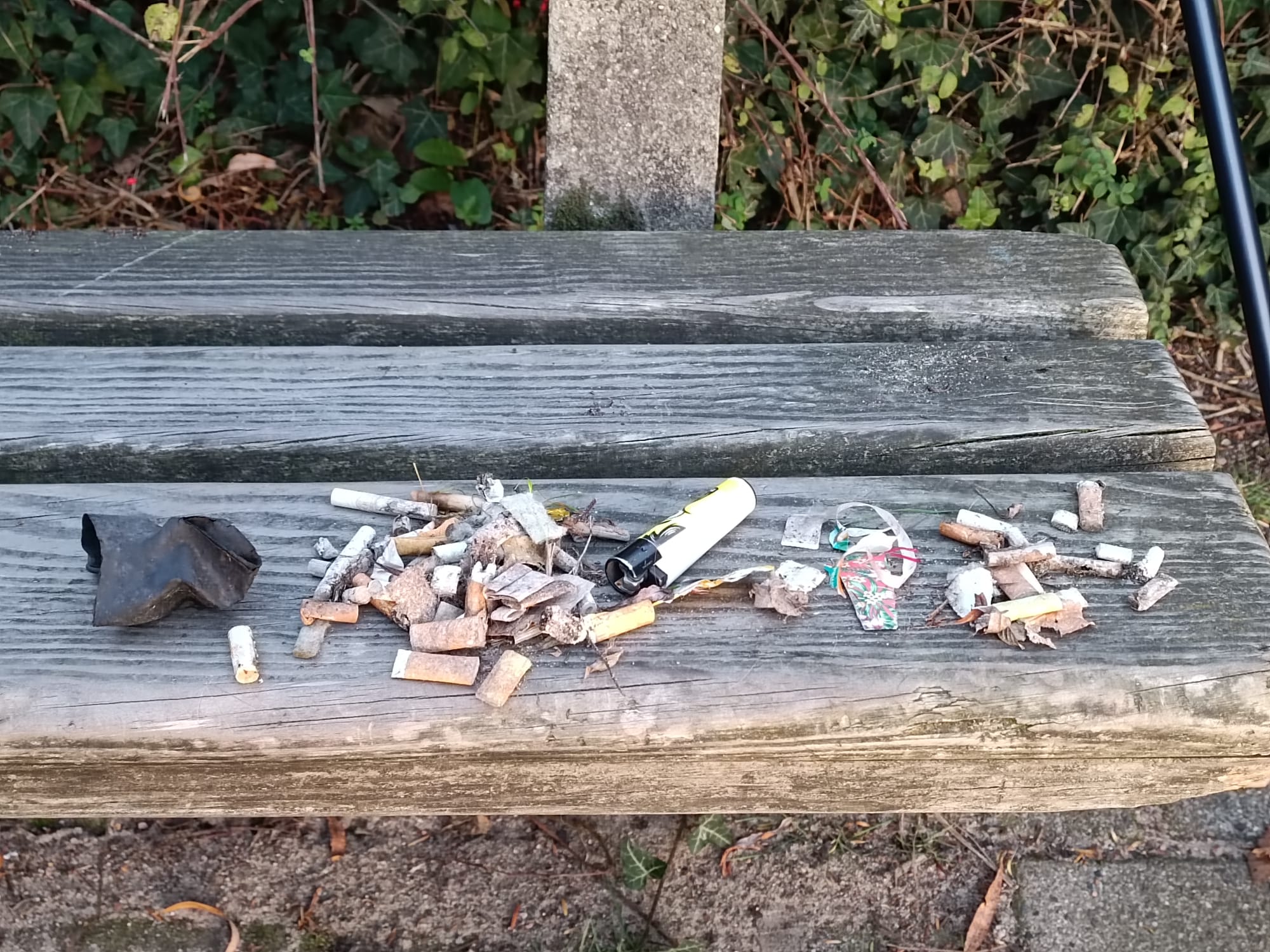
Hamburg’s municipal cleaning service regularly removes litter from the pathways and green areas along the Alster. But how much and what kind of litter accumulates between cleaning days — even in November, when the Alster sees less foot traffic? Which items escape the regular clean-up because they are too small (e.g. cigarette filters, bottle caps) or because they lie in hard-to-reach embankment areas and can thus end up in the water?
Beyond this, questions arise about the role of existing infrastructure: Is there more litter near park benches than elsewhere? Does the absence of waste bins lead to higher litter levels? And what practical management recommendations can be derived from the findings?
Pilot study winter 2025/2026
In the winter semester 2025/2026, the Data Science 1 module conducted its first field-based case study, designed as a pilot for the planned citizen science monitoring programme of the Lebendige Alster project. The goal was to trial a standardised survey protocol in collaboration with the NABU project team, while providing students with hands-on experience in data collection and analysis.
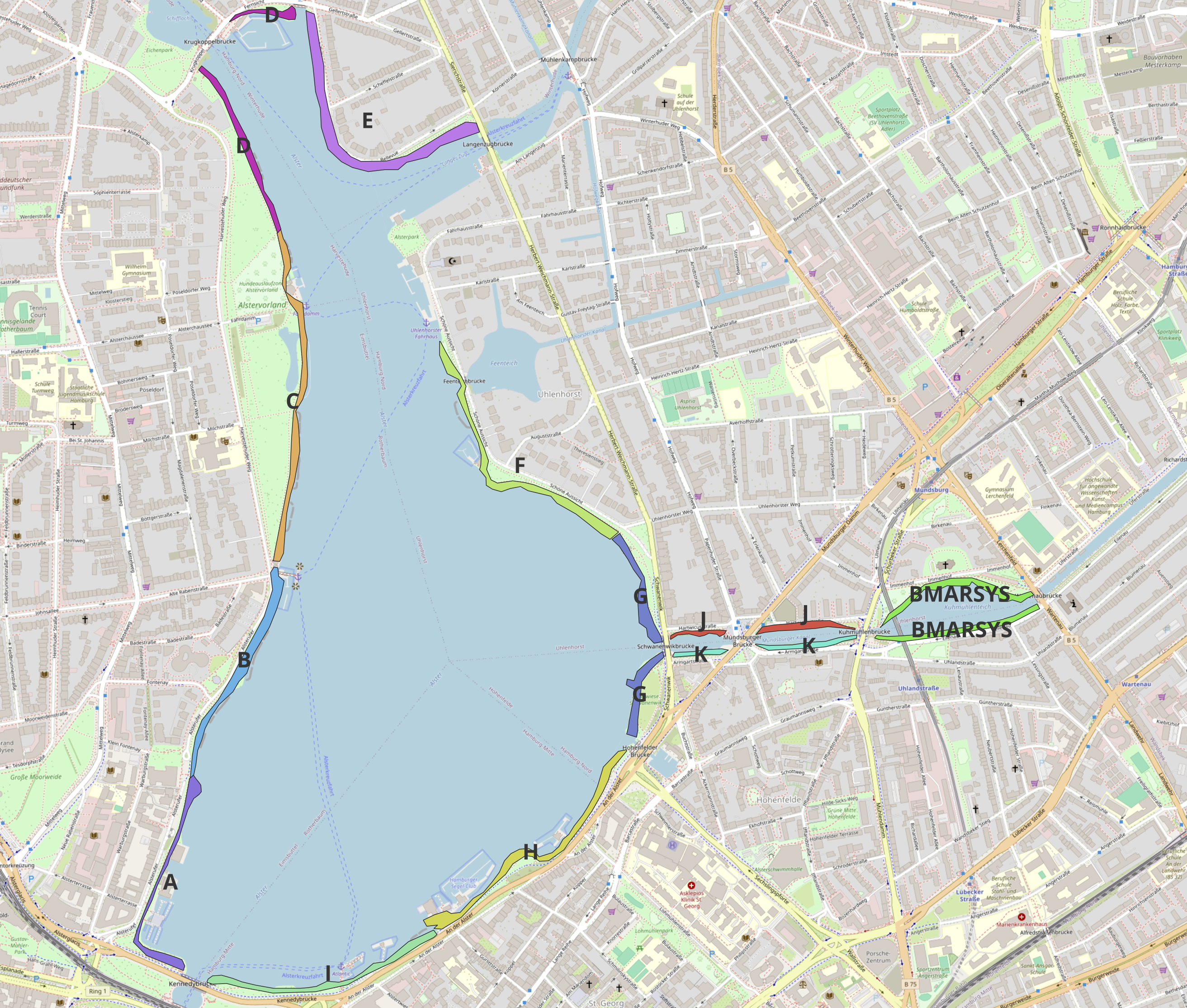
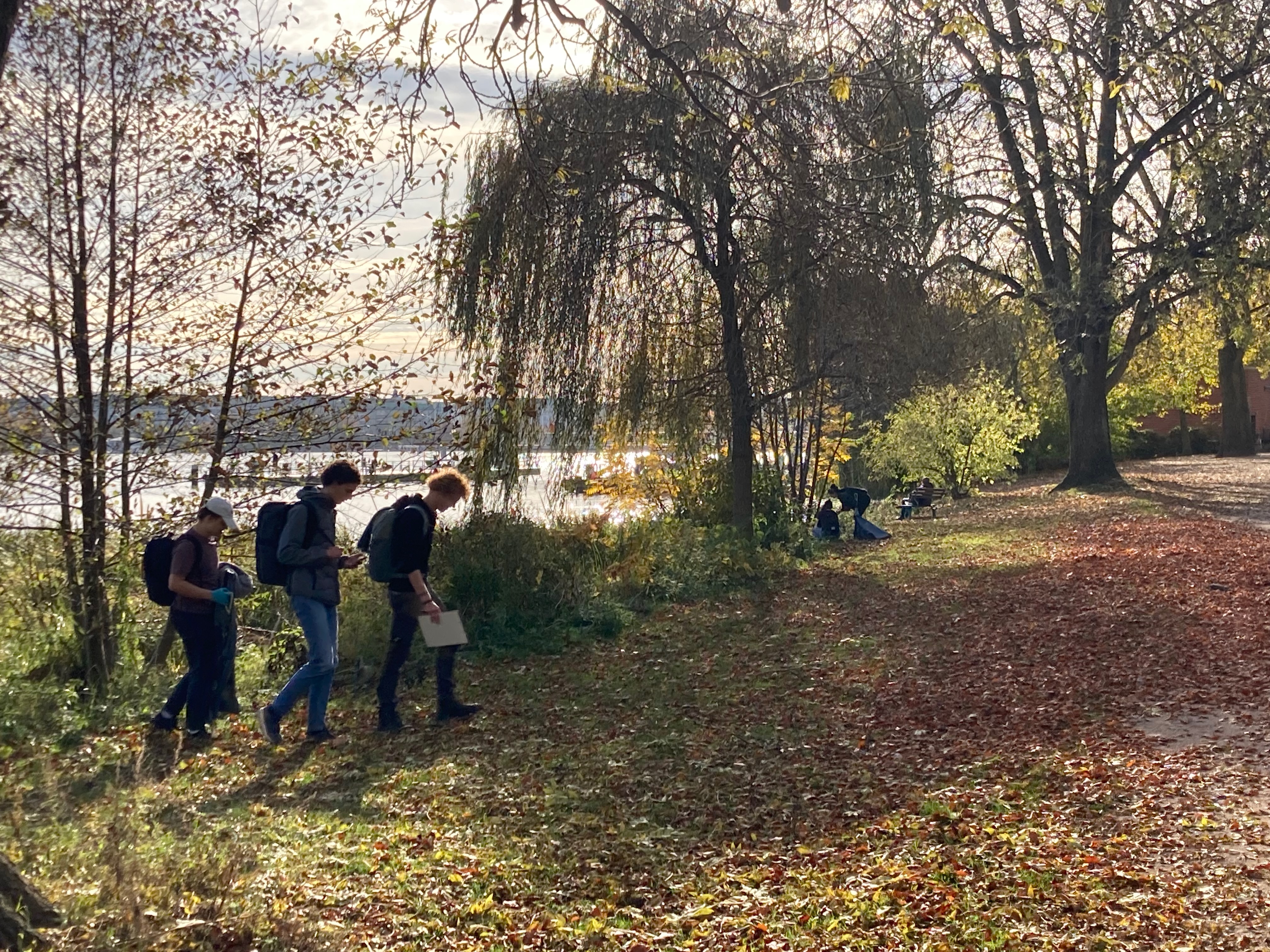
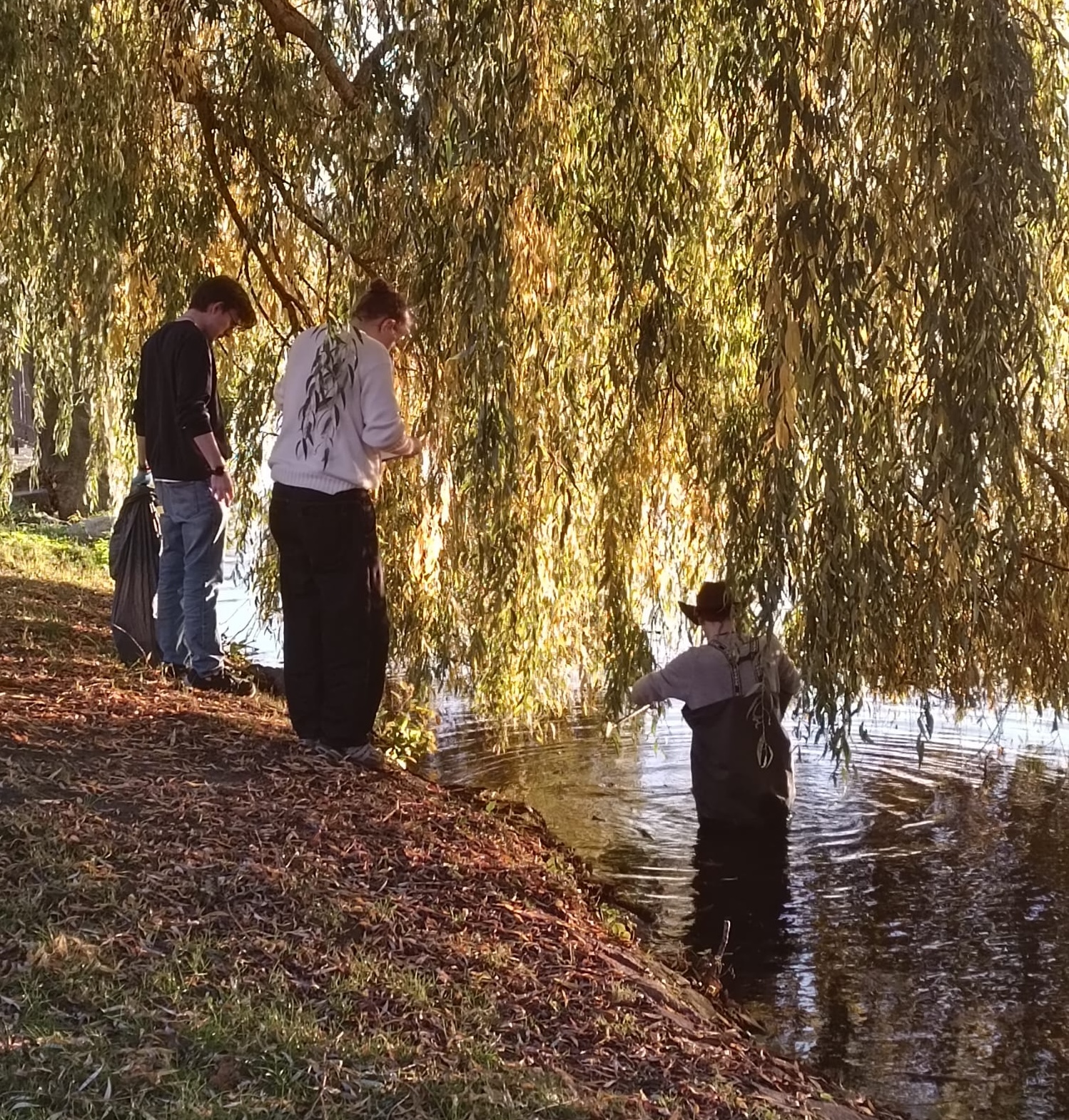
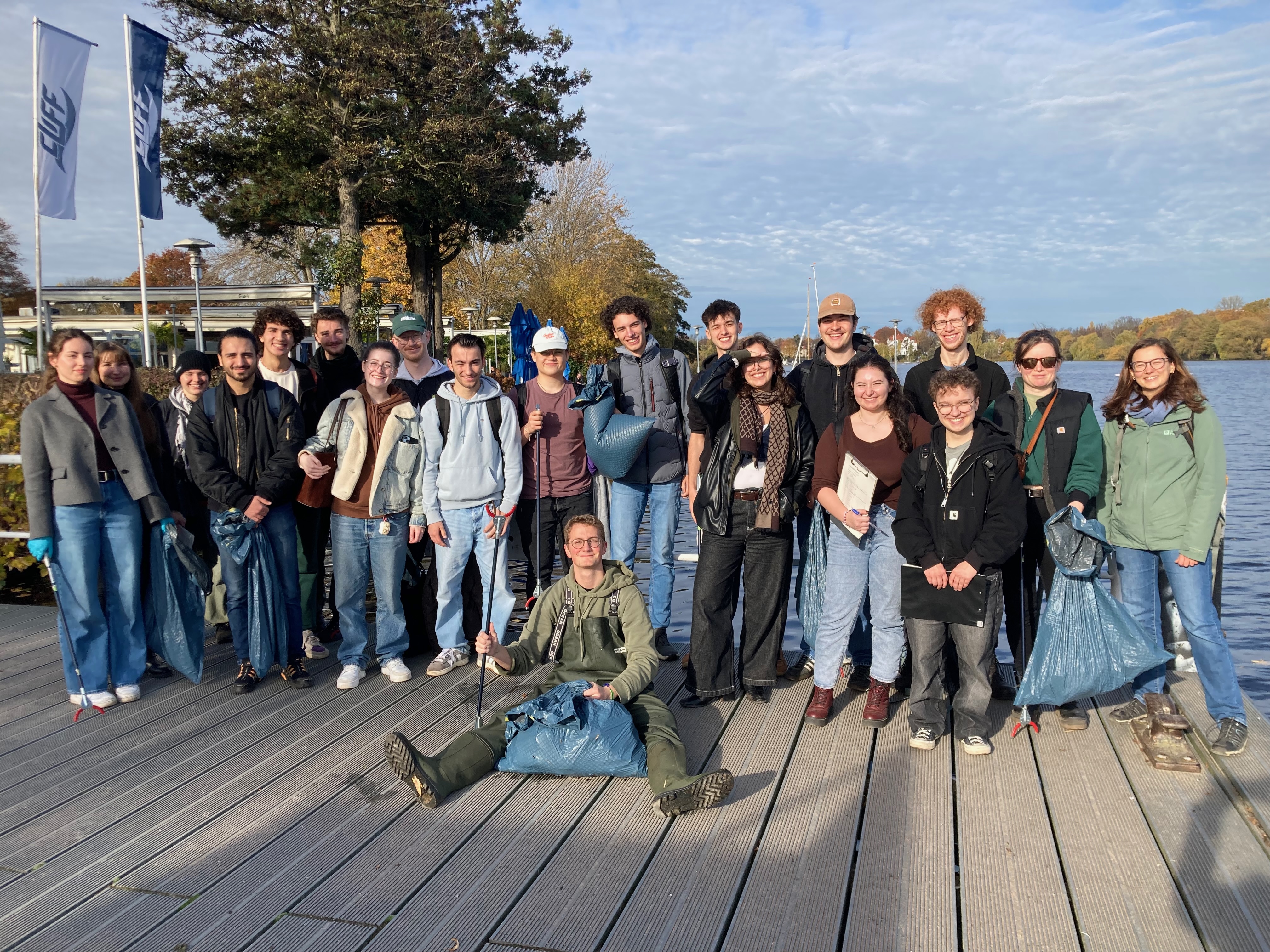
A total of 12 tutorial groups collected and categorised litter along assigned shoreline sections of the Außenalster and the adjacent Mundsburger Kanal in November 2025 (see Figure 1). Each team of 2–3 students documented findings using a predefined category scheme, recorded GPS coordinates via the what3words app, and photographed each litter item. Raw data were entered into standardised Excel templates.
Each team then selected a specific research question — for example on the influence of infrastructure on litter distribution, material composition, or the spatial distribution of cigarette butts — and produced a descriptive analysis in R and a short report. The results were shared with the Lebendige Alster project and are intended to contribute to its public outreach.
Results overview
The following document summarises the collected data from all groups — from the spatial distribution of litter pollution and material composition to the influence of infrastructure.